Products

Six families, one question: what will this layer do?

All of these families are produced on the same line, in the same plant. What separates them is not the name — it is cell structure, recovery behaviour and reaction to flame.

Conventional Polyurethane Foam
CLASSIC General purpose

Conventional Polyurethane Foam

The backbone of the sector. The widest density range and the family that fits the most applications.

Open-cell flexible foam poured to a standard polyurethane recipe. As density rises, load capacity and service life rise with it, and so does cost per unit volume. The right choice follows directly from the load the product will carry: a decorative back cushion and a seat used ten hours a day should not share a density.

Technical data
Density 15 – 45 kg/m³
Hardness Soft · Medium · Firm
Cell structure Open cell
Format Block, sheet, cut to size
Applications
  • Sofa and armchair filling
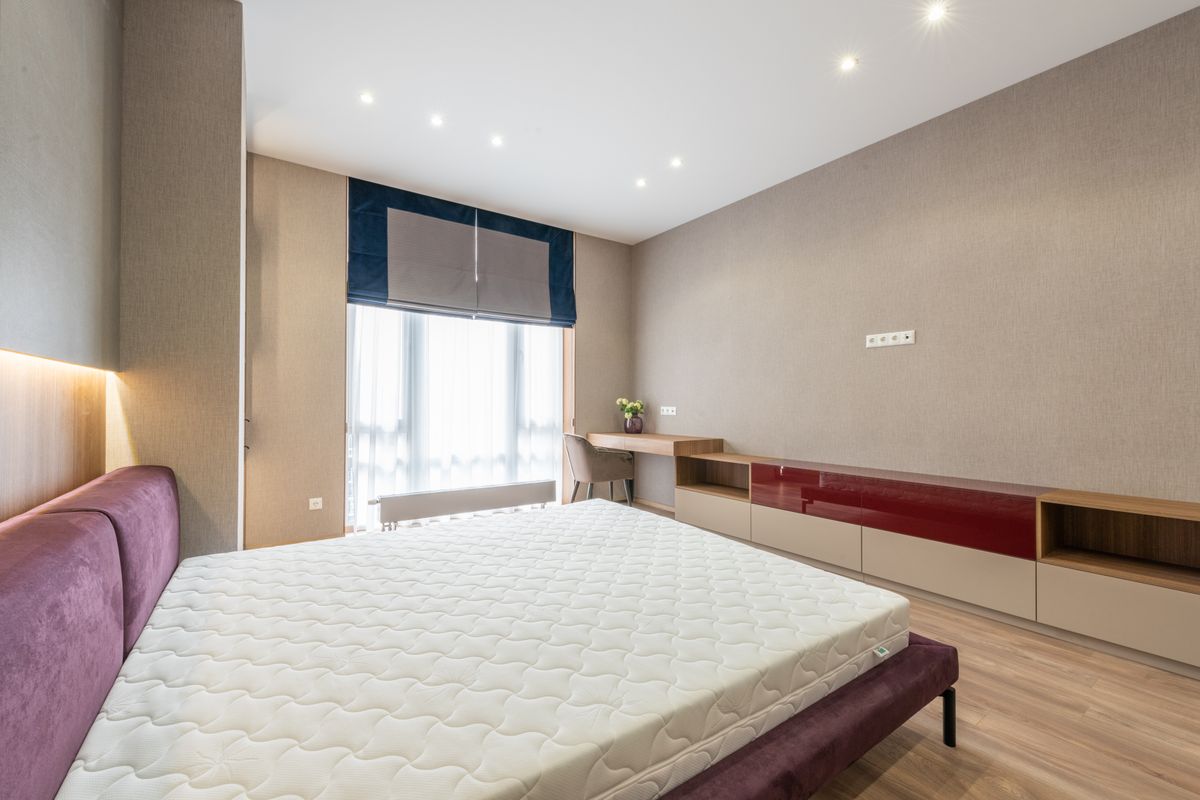
  • Mattress middle layer
  • Back and arm cushions
  • Packaging and protection
  • General furniture
High Density Support Foam
DENSE Load-bearing layer

High Density Support Foam

The layer that sits underneath and is expected to hold its shape for years.

Recipes above 45 density are used where resistance to compression set under continuous load is the deciding factor. Mattress base layers, heavy-use seating bases and orthopaedic applications belong here. Higher density does not automatically mean firmer: load capacity and hardness are two separate values, and we select them separately.

Technical data
Density 45 – 80 kg/m³
Hardness Medium · Firm · Extra firm
Key property High resistance to sagging
Format Block, sheet, cut to size
Applications
  • Mattress base layer
  • Orthopaedic support
  • Heavy-use seating base
  • Industrial vibration pads
Roll Foam
ROLL Thin gauge

Roll Foam

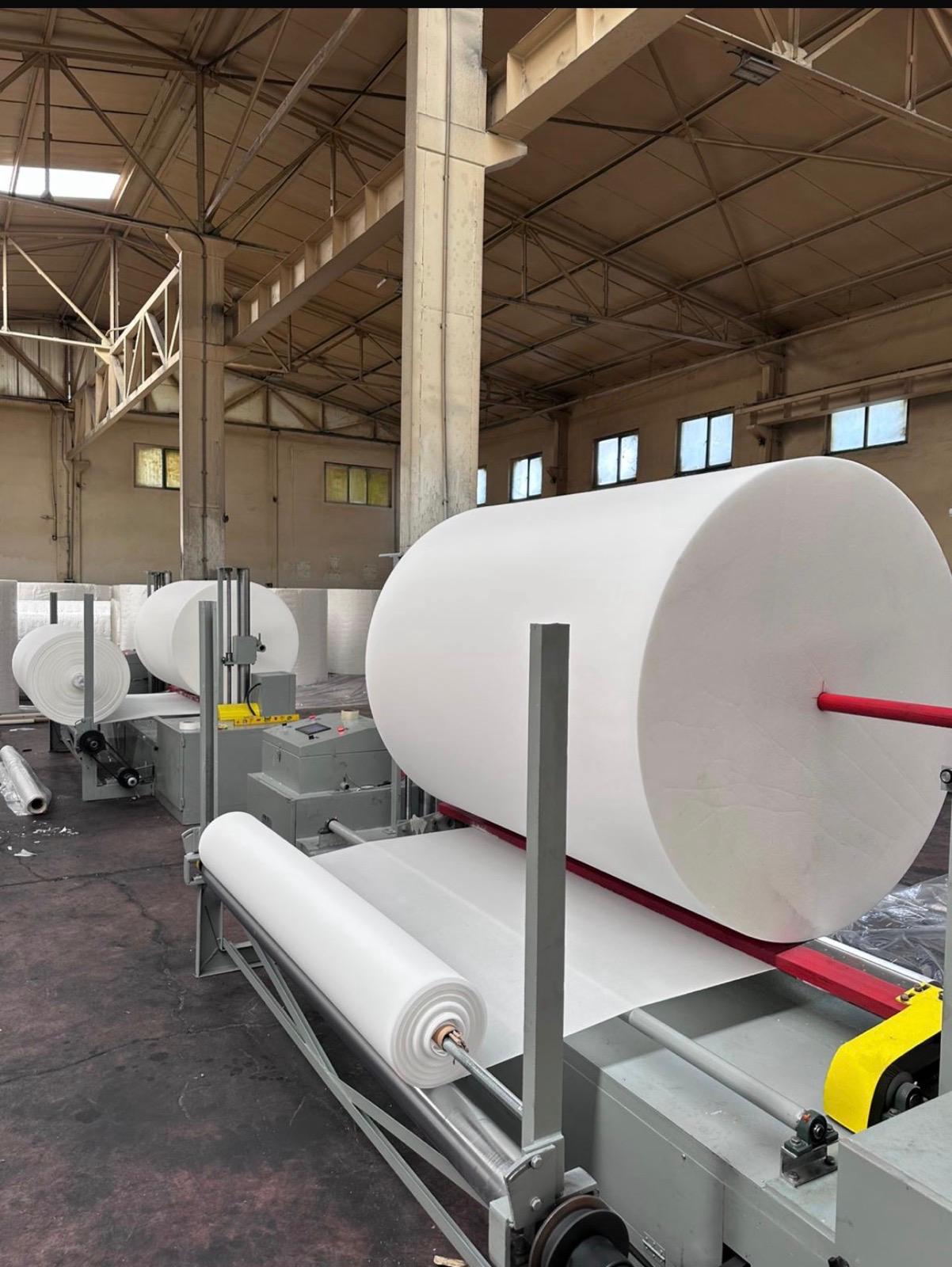
Peeled continuously from a round block — the product for manufacturers who buy by the square metre.

The round block rotates while the blade peels one continuous layer, producing an uninterrupted roll. The offcut waste that is unavoidable in sheet cutting almost disappears here, which lowers cost noticeably at thin gauges. Thickness tolerance is tracked on the line, because in thin products even a millimetre of deviation shows up along the seam.

Technical data
Thickness 3 – 50 mm
Density 16 – 40 kg/m³
Width To order width
Packing Vacuum compressed
Applications
  • Textile and apparel lining
  • Shoe inner padding
  • Mattress top layer
  • Automotive interior trim
  • Packaging
Laminated Foam
LAM Bonded surface

Laminated Foam

Where foam becomes a single material together with fabric, lining or tulle.

When the foam surface is bonded to a textile, the customer works with one ready material instead of stocking and joining two. That cuts both labour and error rate on the sewing line. Bond quality is the real subject here: how the bond behaves against washing, abrasion and time determines the life of the finished product.

Technical data
Construction Foam + fabric / lining / tulle
Foam thickness 3 – 30 mm
Method Flame lamination · Adhesive
Format Roll
Applications
  • Apparel and intimates
  • Footwear and bags
  • Automotive upholstery
  • Furniture fabric backing
Flame Lamination
FLAME Process

Flame Lamination

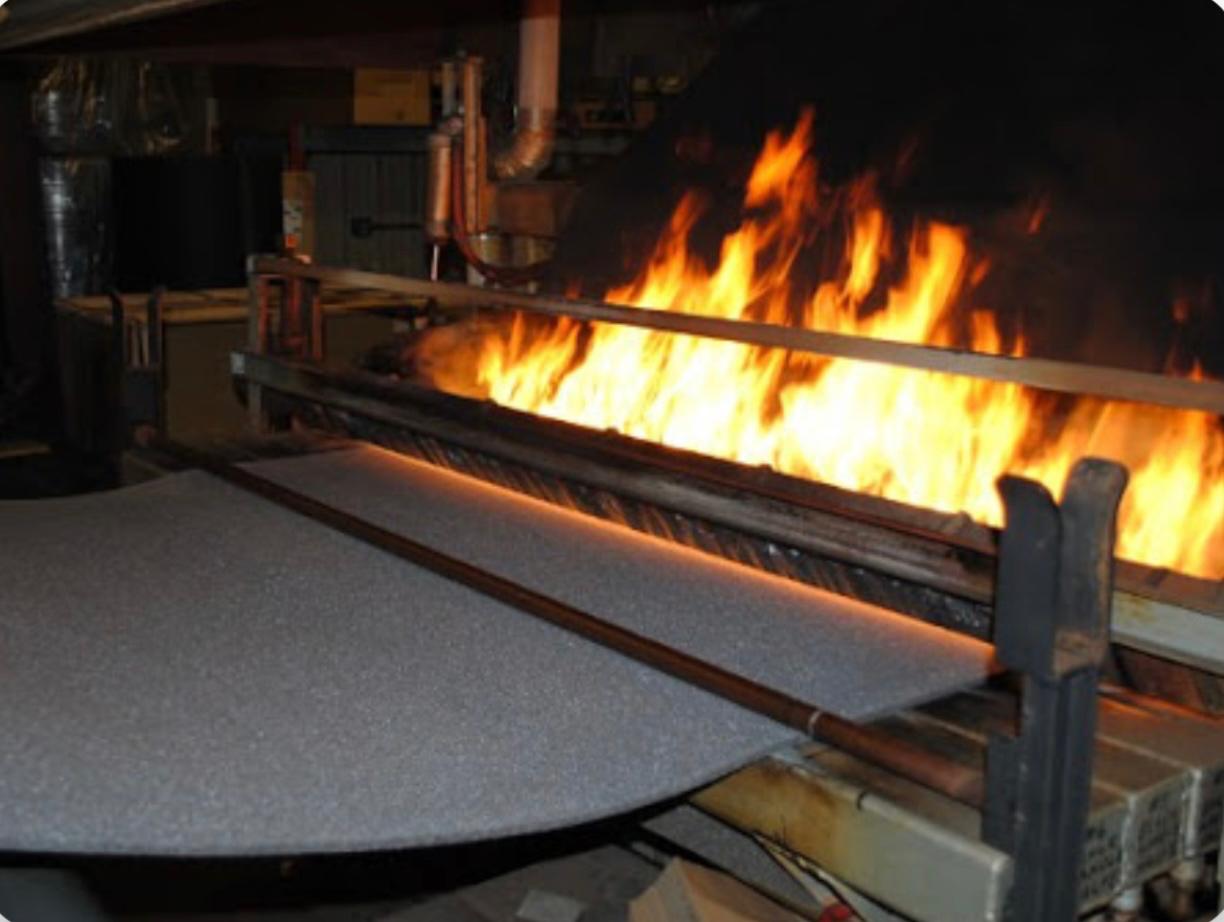
Bonding without adhesive, by melting the foam surface with a controlled flame.

The foam surface passes through a thin flame; the melting layer acts instantly as its own adhesive and bonds to the fabric. With no chemical adhesive involved, the bond stays thin, flexible and breathable — the material does not stiffen and does not lose its hand. Automotive interiors and apparel are where the method is used most.

Technical data
Adhesive None used
Sides Single or double faced
Foam thickness 1 – 10 mm
Key property Flexibility and breathability
Applications
  • Automotive headliner and door trim
  • Apparel
  • Curtain and blackout lining
  • Footwear
FR · Flame Retardant Foam
FR Safety

FR · Flame Retardant Foam

For applications where fire behaviour has to be documented in public-use environments.

Upholstery used in hotels, hospitals, schools, public transport and government buildings is often required to carry a flame retardant certificate. The FR recipe changes how the foam ignites and how flame spreads across it. In this family the target standard must be settled at the very start of the order, because the standard determines the recipe directly.

Technical data
Density 18 – 45 kg/m³
Property Flame retardant additive
Standard Produced to target standard
Format Block, sheet, roll
Applications
  • Hotel and hospital upholstery
  • Public transport seating
  • Government buildings
  • Office furniture
  • Curtains and blackout

The figures show our production range, not a fixed product list. Intermediate values within the range can be produced; the final density and hardness are set together, according to the load the application will carry. Order-specific values are confirmed at the sample stage.

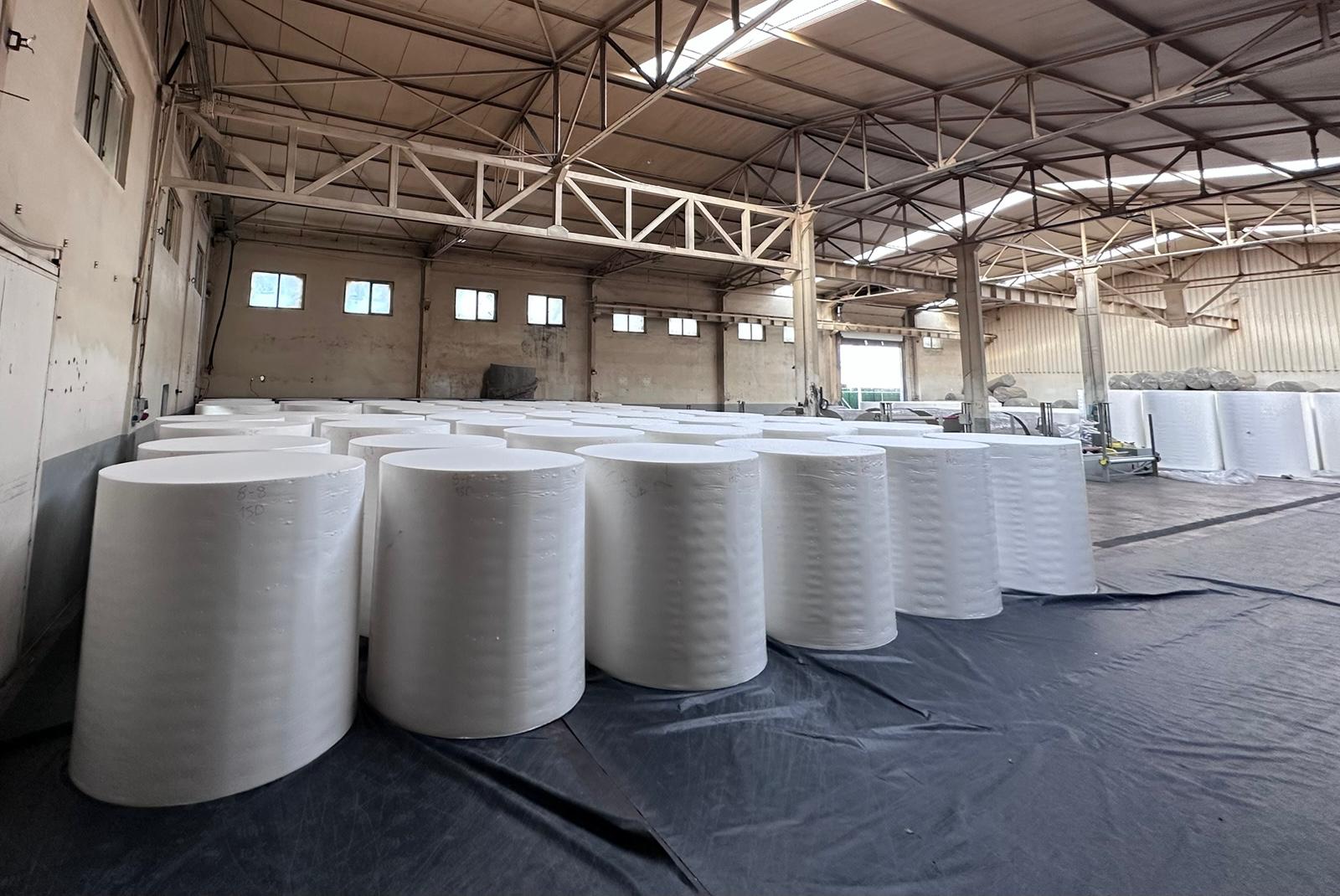
POMONAS FOAM — foam block store Erenler · Sakarya

Production

From liquid to block, from block to the loading dock.

Foam production is an irreversible process. Once pouring starts you cannot change the recipe, which is why the real work finishes before pouring begins.

Production

Frequently asked questions

Frequently asked questions

The questions buyers ask most often, answered directly.

What does foam density mean and what does it determine?

Density is the weight in kilograms of one cubic metre of foam; 30 density means the foam weighs 30 kg per cubic metre. Density does not determine firmness — it determines load capacity and service life. Soft and firm foam can both be made at the same density. Resistance to compression set under continuous load follows directly from density, which is why density is the value that really decides how many years the product will last.

What foam density is needed for a sofa seat?

For a domestic sofa seat, 28–35 kg/m³ is the common range; for heavy-use seating occupied many hours a day, 35–45 kg/m³ is preferred. Back and arm filling can use a lower density, because those areas do not carry continuous load. The final choice depends on the weight of the user and the thickness of the cushion.

What density should mattress foam be?

A mattress is not built at a single density but in layers. Typical values are 40–60 kg/m³ for the load-bearing base layer, 25–35 kg/m³ for the middle comfort layer and 16–25 kg/m³ for the thin roll layer at the surface. In public-use settings such as hotels, a flame retardant FR recipe is usually required as well.

What is the difference between roll foam and sheet foam?

Roll foam is peeled continuously from a round block, while sheet foam is cut from a rectangular block. The roll method produces almost no offcut waste, which makes it noticeably more economical at thin gauges of 3 to 50 mm. For thicker and dimensioned parts, sheet cutting is the better route.

What is FR foam and where is it mandatory?

FR foam is polyurethane foam containing a flame retardant additive, formulated so that ignition and flame spread behave differently. Upholstery used in hotels, hospitals, schools, public transport and government buildings is usually required to have documented fire behaviour. Because the target standard determines the recipe directly, it has to be settled at the very start of the order.

What is flame lamination?

Flame lamination bonds foam to fabric without adhesive, by melting the foam surface with a controlled flame. The melting layer acts as its own adhesive. With no chemical adhesive involved, the bond stays thin and the material keeps its flexibility and breathability. It is the most widely used method in automotive interiors and apparel.

How much foam fits in a container for export?

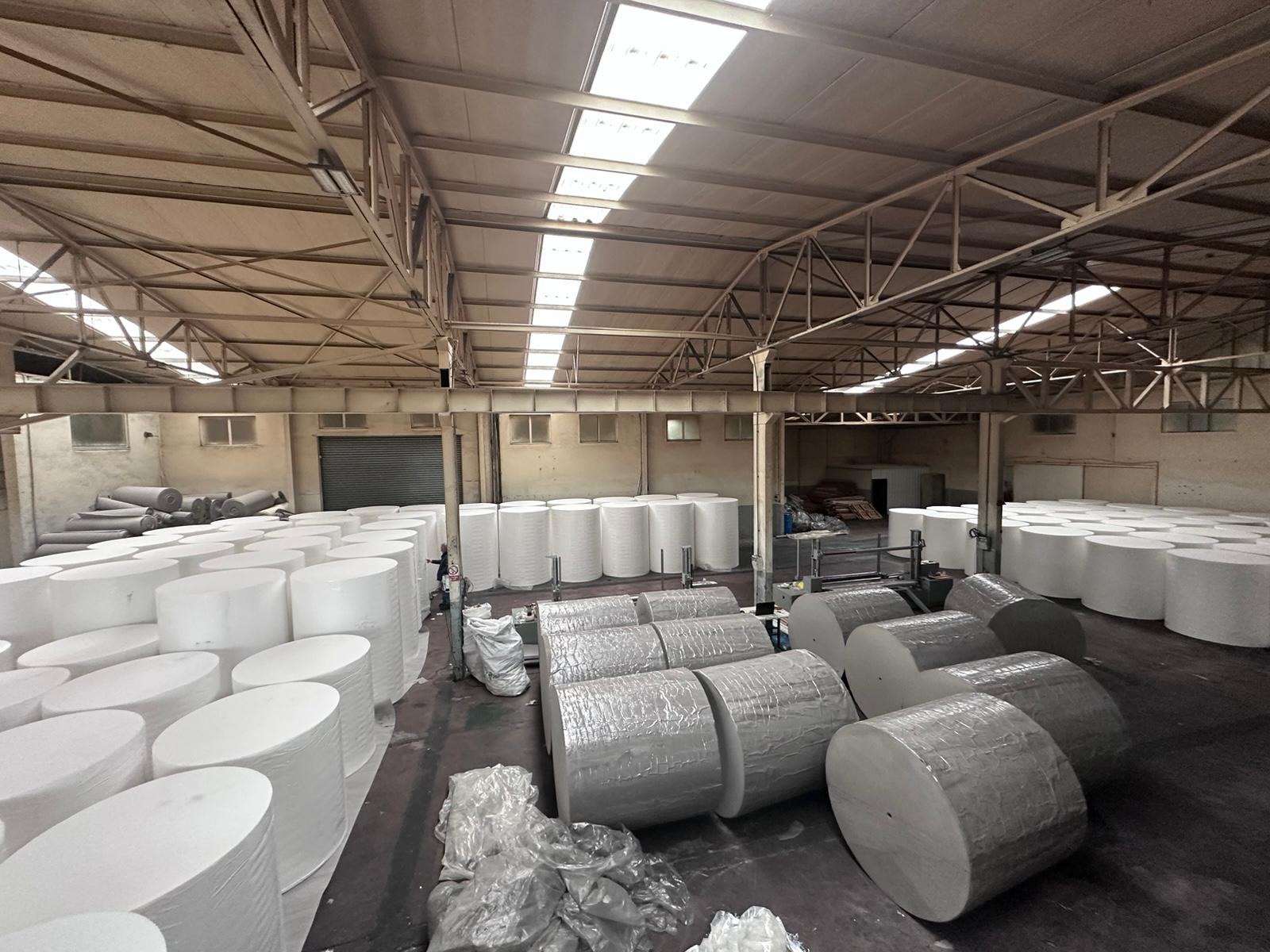
The quantity depends on whether the product is vacuum compressed. Vacuum-pressed roll foam drops sharply in volume, and the square metres carried in the same container rise substantially. This is the single item that most affects unit cost in export; the loading plan is prepared in advance from the dimensions of the order.

Can I get a sample, and is there a minimum order quantity?

Sample requests are accommodated. It is enough to tell us what you manufacture, how the foam has to behave and the target standard if there is one; we then determine the right product family and density range together. Minimum order quantity varies by product type and export destination, so it is shared in response to the specific enquiry.

What is the difference between polyurethane foam and memory (visco) foam?

Polyurethane foam springs back the moment the load is removed. Visco foam softens with body heat, recovers slowly and spreads pressure across the surface. In a mattress the two usually work together: a polyurethane core carries the load, a thin visco layer sits on top. Used alone as the load-bearing layer, visco lets a mattress sag over time, because a viscoelastic formulation is designed to distribute pressure, not to carry weight.

Can you produce to our own formulation or under our own brand?

Yes, we manufacture to order. Send us your sample or technical data sheet and we work out an equivalent formulation, then submit a sample for your approval before production. Dimensions, packaging layout and labelling under your own brand are part of our standard practice.

Which countries do you export to?

The United Kingdom is the market where our products are used most heavily. The destination also sets the expectation for fire behaviour: in the UK, filling material for upholstered furniture is subject to a separate test under the Furniture and Furnishings (Fire) (Safety) Regulations 1988. Because we prepare the flame-retardant formulation to the target standard, we need to know the country and the application at the start of the order; the loading plan and container fill are worked out from the same information.

What is kg/m³ in lb/ft³?

One kg/m³ is roughly 0.0624 lb/ft³. Common equivalents: 25 kg/m³ ≈ 1.56 lb/ft³ · 30 ≈ 1.87 · 35 ≈ 2.18 · 45 ≈ 2.81 · 60 ≈ 3.75 lb/ft³. Buyers in the UK and the United States quote density in lb/ft³ and thickness in inches. We state both units in every quotation — this conversion is where supplier comparisons most often go wrong.

Does foam turn yellow over time, and is that a quality problem?

Polyurethane foam yellows at the surface when exposed to light and air. This is expected chemical behaviour. It does not change the load-bearing capacity, the firmness or the service life of the foam, and it is not visible on surfaces that sit under a cover. Additives that slow yellowing are available. For products that will sit under a light-coloured or thin fabric, discuss this before the order.

Which family solves your problem?

Tell us what you manufacture and how the foam has to behave; we will share the right family, the density range and the sample lead time.

Request a sample